



























Egyptian small farmers grow almost half of the country’s crops, a lifeline that has become increasingly important after grain imports have been stalled by the war in Ukraine – but they are struggling to survive.
Despite their crucial role in supporting the North African country’s 103 million people, small farmers are financially strapped and indebted, and often sell their crops at a loss.
“The farmer is dead, trampled,” farmer Zakaria Aboueldahab told AFP while brewing tea on his rented plot of wheat and onion in Qalyubia, 30 kilometers north of Cairo.
“I’m trying to sell my onion crop but I can’t find a market,” he said, while the remains of his crop were strewn about the ground. “I just want to break even. I don’t know how to pay the rent.”
Its onions would sell in Egypt: But funding, marketing and infrastructure hurdles are creating massive gaps between supply and demand.
According to the Food and Agriculture Organization of the United Nations (FAO), small farms are the “main producers” of food for home consumption in Egypt.
Farmers who farm less than three feddans (1.2 hectares, three acres) — an area the size of a football field — farm up to 35 percent of the arable land.
Nevertheless, they produce around 47 percent of Egypt’s crops, the FAO calculates.
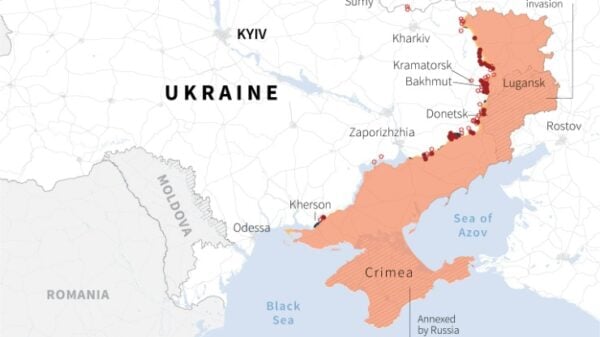
Larger companies are more focused on exports – a dynamic that came to a head when Russia invaded Ukraine.
– “Patriotic Duty” –
Egypt, the world’s top importer of wheat, relied on Russia and Ukraine for 80 percent of its imports, which provided the flour for Egypt’s traditional flatbread.
Ordinary Egyptians eat bread with almost every meal, and Egypt’s wheat farmers increased production to 40 percent of the country’s needs.
“Without the 40 percent of the wheat that we produce domestically,” rural sociologist Saker al-Nour told the AFP news agency, “the war would be much worse.”
In March, Cairo ordered farmers to plant wheat, calling the “mandatory delivery” a “patriotic duty.”
By June, farmers had provided more than 3.5 million tons, more than half the domestic supply target by August and equal to the total amount shipped in 2021, according to the Supply Ministry.
Forced deliveries were a pillar of President Gamal Abdel Nasser’s socialist policies in the 1960s, but these policies were dropped under the structural adjustment programs of the 1990s.
With them went the former subsidies for seeds, pesticides and fertilizers, which have steadily dwindled over the decades.
“When things got tough, it immediately went back to forced delivery, but this time without the services that came with it,” Nour said.
To encourage farmers to grow wheat, the government previously set domestic prices higher than import prices.
But the unprecedented rise in global prices undermined this.
– Stronger together? –
“Now I owe the pesticide guy money, the fertilizer guy,” Abouldahab said. “So if someone comes along and bids a low price, what should I do?”
One solution is for small farmers to band together and harness the power of technology.
Entrepreneur Hussein Abou Bakr founded a start-up financing company called Mozare3, “farmer” in Arabic, which offers farmers financing solutions and agricultural support.
It also helps farmers to “bloc” in the absence of effective local cooperatives, and fixes prices “as a form of protection” against market fluctuations.
Nour warns that small farmers have “very limited bargaining power, especially if they don’t have the storage capacity for their crops.”
But with 32 percent illiteracy among small farmers, according to the FAO, offline village associations are necessary.
In the face of climate change, Nour warns that bottom-up approaches are essential.
These associations could, for example, communicate extreme weather events quickly and directly to farmers whose harvests are at risk.
These tools exist, said the sociologist. “We just have to make them available to small farmers.”
#Egypts #small #farms #play #big #role #struggle #survive