




















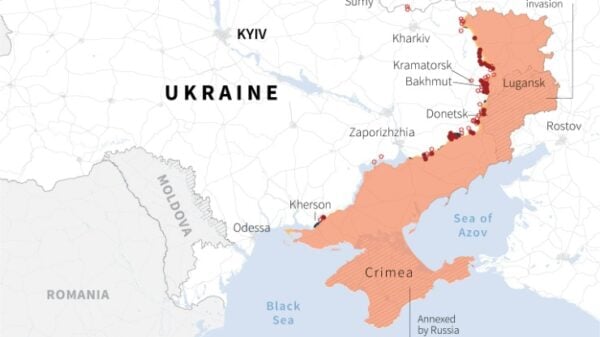


Russia’s war in Ukraine poses the greatest threat to the global economy, US Treasury Secretary Janet Yellen said Thursday as G20 ministers prepare to start talks in Indonesia.
The invasion of Moscow has sent inflation skyrocketing at a time when the world is struggling to recover from the Covid-19 pandemic, jeopardizing the gains of the past two years and threatening widespread hunger and poverty.
“Our biggest challenge today is Russia’s illegal and unprovoked war on Ukraine,” she said before a meeting between finance ministers of the world’s leading economies and central bank governors on the holiday island of Bali on Friday and Saturday.
“We are seeing negative spillovers from this war in all parts of the world, particularly in relation to higher energy prices and increasing food insecurity,” she added.
“The international community must keep a sharp eye on holding Putin accountable for the global economic and humanitarian consequences of his war.”
Yellen said she will continue to urge G20 allies at the meeting for a price cap on Russian oil to stifle Putin’s war chest and pressure Moscow to end its invasion while cutting energy costs.
“A price cap…is one of our most powerful tools,” she said, adding that a cap would deny Putin “the revenue his war machine needs.”
She expressed hope that India and China would join such a cap, saying it would “serve their own interests” to put pressure on prices for consumers around the world.
But she declined to be advised whether Western officials will stage a multinational strike if Russian officials speak, as they did at a G20 meeting in Washington in April.
“It can’t go on as usual,” she said. “I can tell you that I can certainly expect to express my views on the invasion of Russia in the strongest possible terms… to speak about and to condemn its impact on Ukraine and the wider world economy.”
“I assume that many of my colleagues will do the same.”
– Global outlook ‘gloomy’ –
Russia’s finance minister will not be attending the Bali talks but will be speaking about them virtually, a week after Foreign Minister Sergey Lavrov felt outnumbered by G20 peers in criticizing Moscow’s military attack.
Yellen’s comments echoed those of the International Monetary Fund, who on Wednesday said the global economic outlook had “deteriorated significantly” due to the invasion of Moscow, just months after he revised down his global growth forecast for 2022 and 2023.
The IMF “forecasts another downgrade in global growth” in 2022 and 2023, Kristalina Georgieva said in a blog post published ahead of this weekend’s meeting.
The risk of “social instability” is also increasing because of rising food and energy prices, she wrote.
But there was substantial progress in attempts to break the impasse after Russia and Ukraine met in Turkey on Wednesday for their first direct talks since March over a deal to ease the food crisis caused by blocked Black Sea grain exports.
UN Secretary-General Antonio Guterres called it a “ray of hope to alleviate human suffering and alleviate hunger around the world” ahead of another round of talks scheduled next week.
#Russias #war #Ukraine #biggest #challenge #global #economy #Yellen