



























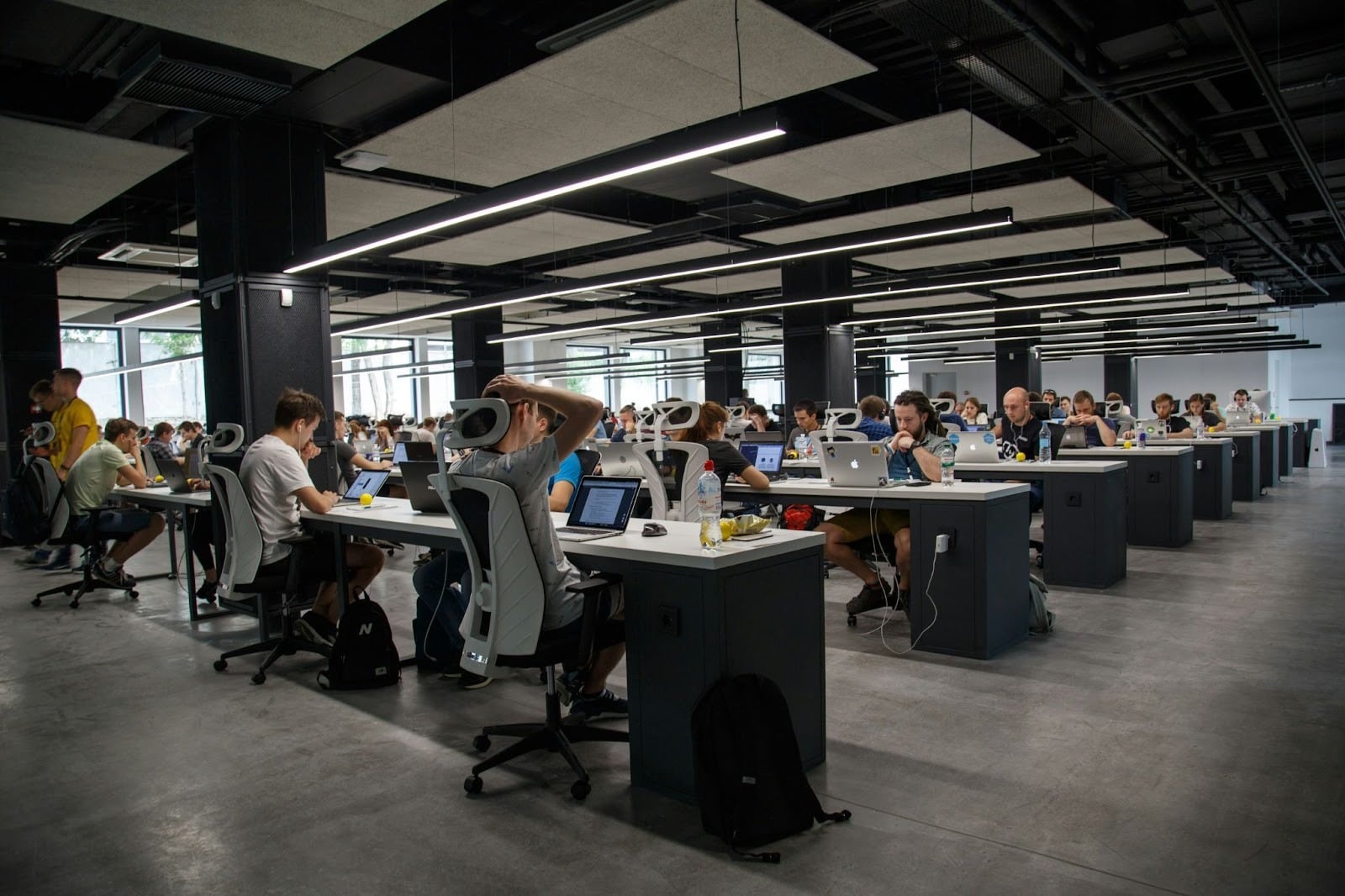
For centuries, work has been defined by direct human effort. Writing, calculating, assembling, managing, and deciding were central to economic activity. Each technological revolution, from the steam engine to the computer, changed how work was done, but humans largely remained the primary operators. Today, that assumption is shifting.
As artificial intelligence, automation, and autonomous systems advance, human roles are moving away from execution and toward oversight and orchestration. The future of work is not about humans being replaced. It is about redefining where human value lies.
From Execution to Oversight
Machines are increasingly performing tasks once handled by people, including generating reports, writing code, diagnosing problems, and optimizing logistics. Adoption is widespread. Nearly nine in ten small businesses are already using AI, and more than sixty percent report measurable productivity gains. Yet many still face knowledge gaps, implementation challenges, and concerns about responsible AI use. This highlights that value is not just in using AI, but in guiding it effectively.
The evolution becomes even clearer as organizations move beyond AI as a content generator toward more autonomous systems. Brian Peret, Director of CodeBoxx Academy, explains, “While the use of AI as content generator has reached mainstream adoption, the shift to agentic systems is far more profound. It is the difference between asking a machine to write an email and trusting it to run an entire workflow. Rather than eliminate the human, it elevates them from a task executor to an architect of outcomes, where the value lies in logic and problem framing rather than rote syntax.”
Instead of executing tasks, workers are becoming supervisors of intelligent systems. They set goals, define boundaries, monitor performance, and intervene when outcomes diverge from intent. Engineers spend more time reviewing and integrating AI-generated code. Managers rely on analytics to make informed trade-offs. Designers guide creative exploration using generative tools. Oversight now includes evaluating quality, managing risks, ensuring ethical alignment, and taking accountability for results.
Orchestrating Systems and Redefining Expertise
The future of work is not about managing individual tools. It is about orchestrating interconnected systems. Workers will coordinate multiple AI agents, platforms, and automated processes to achieve shared objectives. This requires systems thinking, including understanding how inputs, outputs, incentives, and feedback loops interact across an organization.
Expertise is shifting from technical proficiency to judgment and decision-making. Early career roles will focus on evaluating outputs and developing system literacy. Mid-career professionals will integrate technology with business and societal needs. Senior leaders will set direction, manage complexity, and cultivate trust between humans and machines. Productivity gains now depend less on tool adoption and more on how effectively humans govern and orchestrate AI.
The Human Role in an Automated World
As machines take on tasks that no longer require human effort, distinctly human skills such as critical thinking, creativity, emotional intelligence, moral reasoning, and the ability to navigate uncertainty become more valuable. The future of work is not less human. It becomes more human as people shift from execution to oversight and orchestration.
This transition also raises important questions. How do we prepare people for judgment-centered roles? How do we measure performance when outcomes are co-produced by humans and machines? How do we ensure that productivity gains are applied responsibly and equitably?
The future of work is not humans competing with machines. It is humans working at a higher level of abstraction. People define purpose, guide systems, and take responsibility for outcomes.
Organizations and professionals must act now. Leaders should invest in AI literacy, systems thinking, and ethical decision-making. Professionals should develop oversight skills, judgment, and the ability to orchestrate complex workflows. The time to move from task executor to architect of outcomes is today. Embrace the change, guide intelligent systems, and take responsibility for shaping the future of work.