




















Wildfires are usually at their peak from July to October. This year is no exception. Summer droughts, reduced snow cover on mountain tops, and lightning strikes have doubled the area of wildfires in the western United States. In this new resource on wildfire air quality, Camfil air quality experts explain and illustrate the following topics.
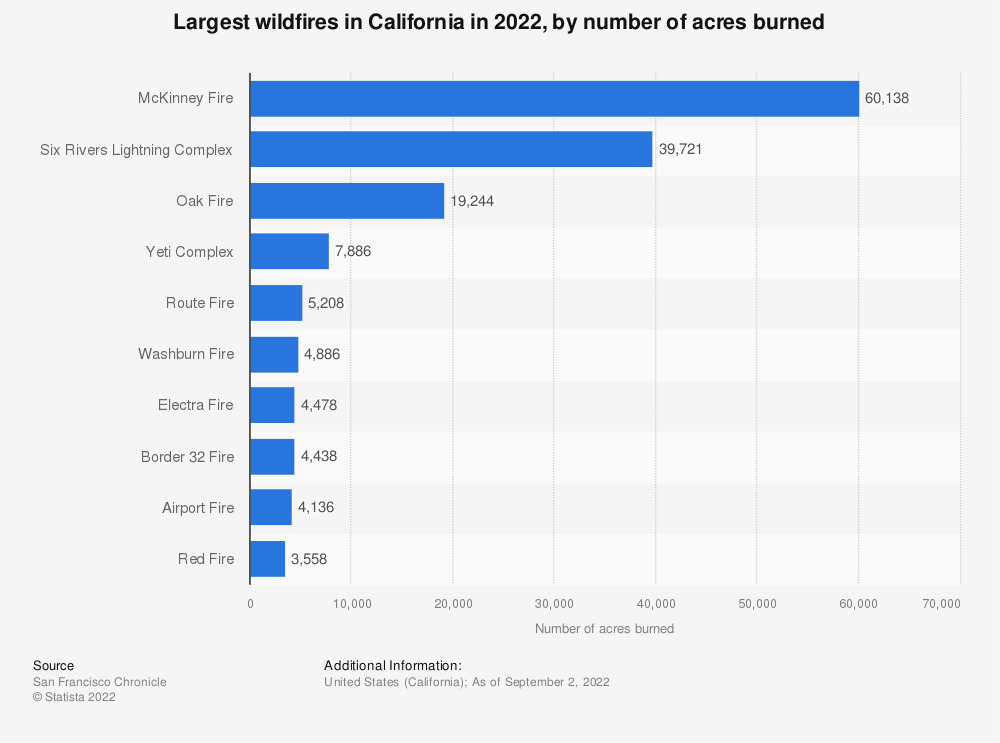
Largest wildfires in California in 2022, by number of acres burned
- Does smoke from forest fires affect air quality?
- Why the smoke from forest fires is a health concern
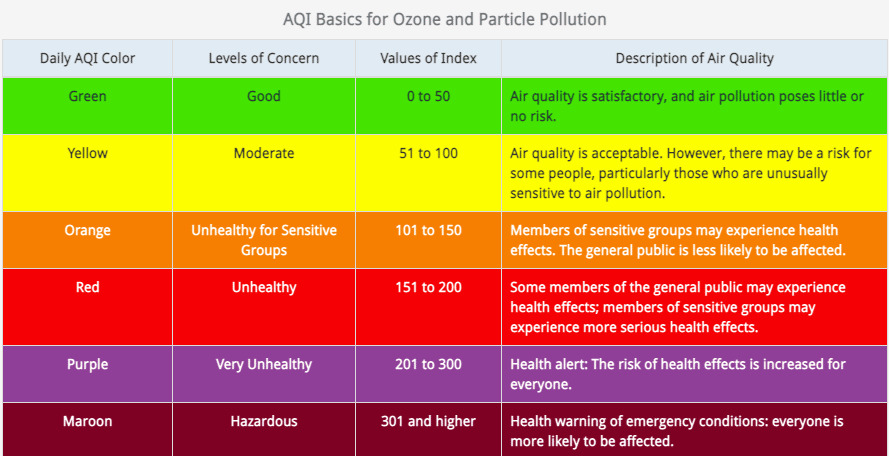
- What is the air quality index?
- How wildfires affect AQI
- Forest fire smoke filtering (cleaning the air)
- Detection of PM2.5 particles
- detect gases
- Installation of filtration to mitigate wildfire smoke
- Camfil recommendations
Download this comprehensive report here:
Camfil recommends installing 12″ deep MERV 14A filters for PM2.5 and 12″ high performance carbon filters for gas removal. If there are two filter banks, a Durafil MERV14A followed by one CitySorb DP (Carbon) molecular filter is recommended. If there is only one filter bank, the facility should use a CityCarb I combination filter of MERV 14A plus molecular filter (carbon). ISO tests show that the CitySorb DP and Camfil City Carb I Filters have superior performance against ozone, nitrogen dioxide, sulfur dioxide and toluene, which is used to represent smoke odors. Camfil encourages engineers to design tomorrow’s systems with two banks so that each filter can be used over its entire lifetime.
Camfil recommendations for improving air quality in wildfire-affected areas
Facilities may also use supplemental indoor filtration during wildfires. This air purifier like that City M with HEPA and molecular filters and modular CamCleaner systems are commonly used in waiting rooms of hospitals, universities, offices, etc. to supplement the amount of air washing in a room.