





















US central bankers have hammered out a single message: interest rates will rise until inflation starts to fall. But financial markets continue to hope to hear a different tune that suggests the pace of rate hikes will slow.
All eyes will be on the annual meeting of policymakers in Jackson Hole, Wyoming, this week to hear Federal Reserve Chair Jerome Powell explain his stance — once again — with market watchers hoping for something more to get to your liking.
The Fed could become a victim of its own success.
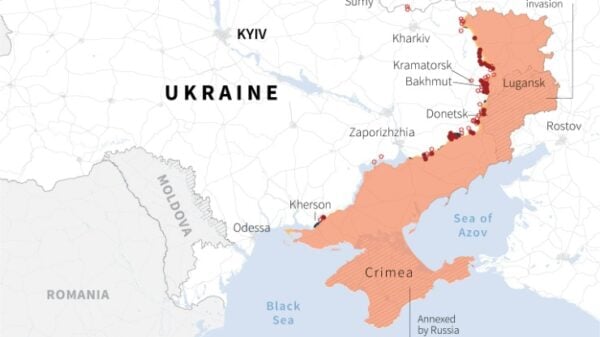
After keeping the benchmark interest rate at zero throughout the pandemic, the surge in prices, which rose to a 40-year high following the Russian invasion of Ukraine, prompted the central bank to take aggressive action.
Fighting blistering inflation, which topped 9 percent in June, the Fed hiked rates four times, including massive three-quarter-point hikes in June and July — steep moves not seen since the early 1980s.
But in recent weeks, signs of easing price pressures and a slowing economy, along with falling energy costs and signs that global supply chain problems have eased, have made financial markets optimistic that the Fed will roll back or even suspend rate hikes – and is even starting to do so cut next year.
Wall Street stocks have risen for four straight weeks, even as a number of officials reiterated the message that interest rates will continue to rise even as annual inflation slowed in July as oil prices fell.
While the annual gathering often becomes a place for global central bankers to signal a shift in policy, Powell is expected to reiterate that message on Friday — though he may acknowledge a slowdown will materialize later in the year.
“It seems like what we’ve heard from Powell so far suggests there’s a pretty high bar for them to transition from aggressive hikes to a slower pace of 25 basis point increments,” said Jonathan Millar of Barclays.
Millar, who has served as a Fed economist and forecaster under four central bank governors, told AFP that markets continue to look ahead and expect rate hikes to be successful in slowing inflation.
But for policymakers, “one thing they definitely want to communicate is that they will remain very focused on price stability issues and will be very cautious on signs of improving inflation data.”
That means indication prices are falling more broadly, and not just because of the falling oil.
Managing market expectations “is really job one,” Millar said. “You have to enforce this credibility.”
But like other economists, he believes the Fed’s policy-making Federal Open Market Committee (FOMC) will backtrack on a 0.5 percentage point hike at its September meeting, widening the interest rate range to 2.75 to 3.0 percent, then moving on to quarter point hikes in November and December
– Walking a fine line –
Oxford Economics’ Kathy Bostjancic said the dilemma for Powell is to acknowledge progress towards a soft landing – bringing inflation back to the 2% target without derailing economic growth – while also acknowledging the Fed’s determination to confirm.
He “still has to walk a fine line,” she told AFP news agency. “You don’t want to be too pessimistic.”
And with home prices and sales cooling off from their blistering pace, along with other encouraging data, “he has tailwind.”
But she said: “The message he really needs to get across is that we’re still going to try to raise rates to hawkish levels to really make sure inflation is still our top priority.”
The annual monetary policy symposium, hosted by the Kansas City Federal Reserve Bank, will be held August 25-27. It’s often a place for officials from around the world to discuss policy changes in the works, but so far no major global central bank governor other than Powell has confirmed that he will speak at the event.
#Markets #clarity #ignoring #Feds #message