



























#curators #save #heritage #Ukraine #cost

Upon learning that Russian troops were advancing into the Zaporizhia region, Natalya Chergik helped load a ton of paintings, antique firearms and ceramics from the 17th century into a truck.
“We drove 1,000 kilometers in five days. The drive was terrible, planes flew overhead and we didn’t even know if they were Ukrainians or not,” she says.
“The hardest part for us was convincing people at the checkpoints not to search the artwork and letting the truck pass as quickly as possible.”
Chergik is a curator in Khortytsia, a 30-square-kilometer museum island in the Dnipro River that has been a base for Ukrainian Cossacks since the 16th century.
It was home to the first Saporoshzhian “Sich” – a kind of Cossack state ruled by direct democracy, which lasted until 1775 when the Russian Empress Catherine the Great destroyed it.
This is a “sacred place for Ukraine’s history,” said Maksym Ostapenko, the 51-year-old head of the Khortytsia Reserve, an important Ukrainian cultural center that houses, among other things, dozens of historical artifacts found during archaeological digs across Ukraine for years .
– ‘Evacuation Plan’ –
Ostapenko and most of his colleagues joined the Ukrainian army in the early days of the invasion.
But that doesn’t mean they’ve given up their museum.
“To tell the truth, we drafted an evacuation plan in 2014 after Crimea was annexed by Russia,” Ostapenko said.
Curators created a list of “the most valuable works of art, out of about 100 pieces, which would have to be evacuated first in case of danger”.
“Cultural heritage cannot be rebuilt. We have to take precautions,” said the director.
As early as February 23, two days after Russian President Vladimir Putin delivered a speech stoking fears of an invasion, the museum’s team began dismantling the artwork.
When Moscow launched the invasion the following day, evacuation began under Russian fire.
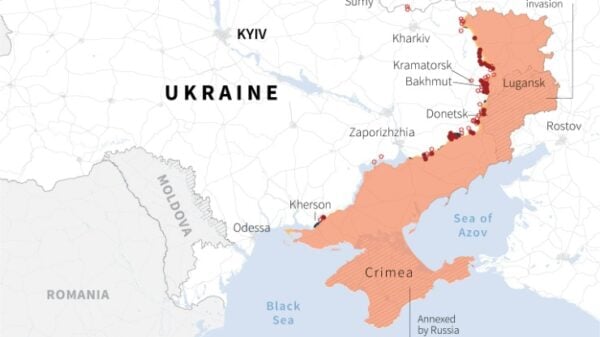
The Russian army was stopped about 40 kilometers from Zaporizhzhia and did not capture Khortytsia. Three rockets hit the island but did not damage the museum.
But Russia quickly took over the “Sich” in Kamianska, a similar but autonomous polity.
There is a branch of the museum there.
“Staff have no access to the website. And we lost contact with our colleagues some time ago,” said Ostapenko.
– looting –
According to the UN cultural organization UNESCO, 175 Ukrainian cultural sites have been damaged since the invasion began.
The Ukrainian Ministry of Culture estimates that there are about 100 museums and 17,000 cultural objects in the occupied territories.
About 60 kilometers from Khortytsia is the town of Wassilivka, which was captured by the Russian army in the first days of the war.
The town is home to the Popov Mansion, an unusual 19th-century Neo-Gothic mansion that was damaged by shelling in early March.
Part of the museum team decided to stay.
Its manager, 39-year-old Anna Golovko, lives in Zaporizhia, but tries to keep in touch with her colleagues.
“They are doing everything they can to preserve the buildings, but it remains extremely difficult. As soon as they cover a window, another shelling blasts it,” she said.
The museum team did not have time to evacuate the artwork. Already the day after the fall of the city, Russian troops went to the museum to loot it, Golovko said.
Two of her colleagues were even arrested for four days earlier this month and asked to reveal the location of the artwork, Golovko said.
As for Chergik, after her long journey to Zaporizhia, she came back to take artworks for storage in the west of the country.
She said the fate of Ukraine’s heritage, particularly in the occupied territories, was a “painful and ever-present” issue for her.
“If we don’t save our cultural heritage, Ukraine’s victory is worth nothing.”
Social Tags:
#curators #save #heritage #Ukraine #cost