




























Asian markets struggled on Monday and the dollar posted big gains as a blockbuster US jobs report fueled bets that the Federal Reserve will announce stronger rate hikes to tame runaway inflation.
While jobs numbers – which were more than double expected – suggested the world’s leading economy has remained resilient despite rising prices and borrowing costs, this will complicate the bank’s plans to tighten monetary policy.
Traders have been hoping that policymakers may start to ease the pace of rate hikes amid multiple indicators pointing to a slowdown, including GDP numbers that are showing a technical recession.
Now speculation is mounting that the Fed will have to announce a third straight 75 basis point hike next month, as officials have said their decisions will depend on data.
“Friday’s pay report points to an overheated labor market that’s still tightening,” said Stephen Innes of SPI Asset Management.
“As such, markets expect at least another 100 basis points of Fed rate hikes over the next three meetings…with risks skewed toward significant hikes.”
All eyes are now on this week’s release of US inflation data for July, which is expected to show a slight deceleration from June but is still at four-decade highs.
The “report seems very unlikely to provide ‘convincing evidence’ of a slowdown needed by the Fed to move away from its aggressive anti-inflation mode.” Added innes.
The jobs number left Wall Street’s main indices mixed on Friday, and Asia followed suit, with markets teetering in early trade.
However, there was some relief that tensions had calmed down since Nancy Pelosi’s visit to Taiwan last week sparked a furious reaction from China, which saw it conduct days of live-fire military drills across the island.
Hong Kong declined along with Sydney, Seoul, Singapore, Taipei, Manila, Jakarta and Wellington.
Tokyo edged up and Shanghai remained flat, with better-than-expected Chinese trade data offset by fresh concerns over Covid lockdowns in the country threatening economic recovery.
The prospect of higher interest rates pushed the dollar higher and it held on to those gains in Asia.
Betting on a recession in leading economies continued to weigh on oil prices as investors worried about the impact on demand – last week’s figures showed Americans are driving less now than they were in summer 2020 at the height of the pandemic.
A surge in US inventories was partly responsible for a 10% drop in the commodity over the past week, pushing WTI below $90 for the first time since February.
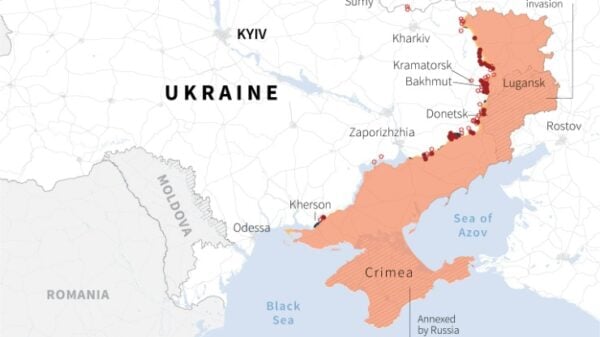
Both major contracts have lost any gains made after Vladimir Putin’s invasion of Ukraine, which prompted the United States and Europe to ban imports of Russian crude, pounding already-scarce supplies.
– Key figures at 0230 GMT –
Tokyo – Nikkei 225: up 0.2 percent at 28,241.09 (breakthrough)
Hong Kong – Hang Seng Index: down 0.6 percent at 20,072.68
Shanghai – Composite: FLAT at 3,227.00
Euro/Dollar: DOWN at $1.0181 from $1.0184 on Friday
Pound/dollar: DOWN at $1.2071 from $1.2075
Euro/Pound: UP at 84.35p from 84.32p
Dollar/yen: up at 135.32 yen from 135.00 yen
West Texas Intermediate: FALSE, up 0.2 percent at $88.87 a barrel
North Sea Brent Crude: FALSE, up 0.3 percent at $94.68 a barrel
New York – Dow: up 0.2 percent at 32,803.47 (close)
London – FTSE 100: down 0.1 percent at 7,439.74 (close)
#Markets #struggle #strong #jobs #boost #Fed #rate #hike #bets