





























Asian stocks were mostly higher on Friday as a fall in oil prices to pre-Ukraine war levels raised hopes of slowing inflation and central bank rate hikes, while focus turns to key US jobs data later in the day.
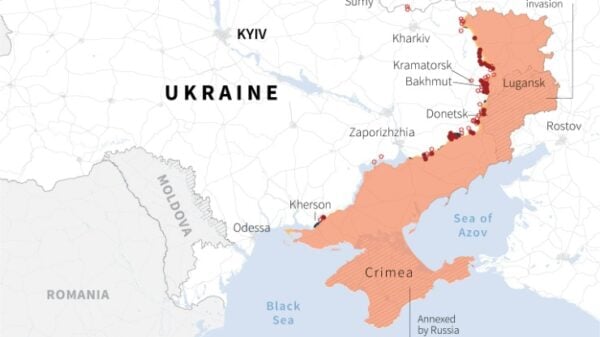
Despite markets having a generally upbeat week, optimism remains high as traders worry about issues such as the conflict in Eastern Europe, China’s military drills in Taiwan and a possible global recession.
Crude oil rose modestly, but expectations that economies will contract – dampening demand – have seen the commodity fall more than 10 percent this week, with US data suggesting Americans are driving less now than in summer 2020 at the height of the pandemic.
And as analysts bang the recession drums, traders are taking heart from the possibility of a respite from central bank monetary tightening.
“The recent drop in oil prices, now trading below levels immediately before Russia invaded Ukraine, has helped the market anticipate that inflation is likely to peak soon, taking pressure off the Fed to raise rates just as aggressively,” said Australia Bank’s National Rodrigo Catril.
Traders will now be closely watching the release of a crucial US jobs report later on Friday for a fresh snapshot of the world’s largest economy.
The Federal Reserve has said its rate decision will be data-driven, with signs of economic weakness likely meaning any hikes will be small.
Officials have said the economy remains healthy despite four decades of high inflation and soaring borrowing costs, while several have indicated they are open to more big hikes to get prices under control.
And Stephen Innes of SPI Asset Management said: “Although some high-frequency data suggest that employment and inflation have eased in some parts of the economy, markets may be wondering if they are soft enough to change course for the Fed. “
In a sign of the long road ahead, the Bank of England has hiked rates the most since gaining independence in 1997, warning that inflation is likely to rise above 13 percent while the UK suffers a prolonged recession.
Wall Street delivered a slight lead after recent gains, but Asia was mostly higher.
Tokyo, Shanghai, Sydney, Seoul, Jakarta, Wellington and Singapore rose while Hong Kong and Manila fell.
Taipei rose more than 2 percent as it allayed concerns about a standoff with Beijing, even as China holds its biggest-ever military drills in Taiwan in response to the visit of US House Speaker Nancy Pelosis this week.
China on Thursday launched a series of multi-zone drills spanning some of the world’s busiest shipping lanes.
While Taipei didn’t say where the missiles landed or whether they flew over the island, Japan said that of the nine missiles it detected, four “were believed to have flew over Taiwan’s main island.”
Federated Hermes’ Geir Lode said: “With a world facing a number of major challenges, there is certainly a lot of optimism about equities at this time.
“Inflation is challenging corporate earnings and weighing on consumer sentiment. A global recession looks likely as growth becomes increasingly scarce. Geopolitical tensions and rising populism are accelerating the trend toward localization (and raising the risk of an even darker future). Climate change threatens us all.
“And yet stocks continued July’s strong rally this week.”
– Key figures at 0300 GMT –
Tokyo – Nikkei 225: up 0.7 percent at 28,131.87 (breakthrough)
Hong Kong – Hang Seng Index: down 0.1 percent at 20,145.45
Shanghai — Composite: up 0.1 percent to 3,191.55
Euro/Dollar: DOWN at $1.0233 from $1.0248 on Thursday
Pound/dollar: DOWN at $1.2139 from $1.2166
Euro/pound: up to 84.31p from 84.21p
Dollar/yen: up at 133.22 yen from 132.95 yen
West Texas Intermediate: up 0.4 percent to $88.87 a barrel
North Sea Brent Crude: up 0.2 percent to $94.35 a barrel
New York – Dow: down 0.3 percent at 32,726.82 (close)
London – FTSE 100: FLAT at 7,448.06 (close)
#Asian #markets #oil #drops #eyes #Taiwan #jobs