





























South Korea’s chip powerhouse Samsung Electronics said Thursday that operating profits rose 12.18 percent in the second quarter, with record profits at its systems semiconductor division despite global supply chain woes.
The company’s “systems semiconductor business … delivered a record-high quarterly profit,” Samsung said in a statement, adding it had both expanded its product lineup and increased shipments of chips to global customers.
“Revenues in the storage business improved both year-on-year and quarter-on-quarter as the company focused on meeting robust demand for servers,” Samsung said.
In June, the company became the first chipmaker in the world to mass-produce 3-nanometer microchips to match and eventually surpass Taiwan’s TSMC in the race to make the world’s most advanced chips.
The new chips will be smaller, more powerful and more efficient and will be used in high-performance computing applications before being built into devices like cell phones.
The vast majority of the world’s most advanced microchips are made by just two companies – Samsung and TSMC – both of which are running at full capacity to alleviate a global shortage.
Samsung is the market leader in memory chips but has been struggling to catch up with TSMC in its Advanced Foundry division, which makes high-tech microchips for other companies.
Samsung, which is also the world’s leading maker of mobile phones, said demand and profits at its smartphone division were down compared to the first quarter.
“Overall market demand declined sequentially on geopolitical issues and concerns over inflation, in addition to ongoing weak seasonality,” it said.
“Profitability declined to some extent from the previous quarter, reflecting rising component and logistics costs and the negative impact of exchange rate movements,” he added.
But overall, the company benefited from the Korean won’s weakness against the US dollar, the statement said, “resulting in a company-wide increase in operating profit of approximately 1.3 trillion won ($994 million) compared to the previous quarter “.
Weak chip market
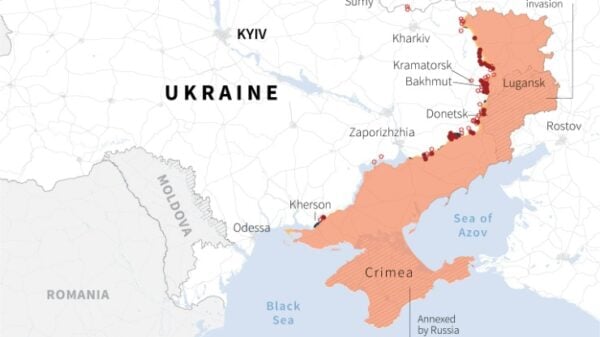
Samsung’s wireless business “is expected to improve in the second half of the year from the second quarter, which was heavily impacted by external elements such as the war in Ukraine,” Cape Investment & Securities analyst Park Sung-soon told AFP.
But reduced market demand for memory chips due to concerns about a possible global recession will hurt the company’s earnings outlook, he said.
“What drives Samsung’s overall profit is its semiconductor business. With demand for memory chips expected to slow, sales could be weaker in the second half of the year.”
Global demand for chips “is entering a period of weakness that will last into 2023,” Richard Gordon, an analyst at research firm Gartner, said in a report, according to Bloomberg.
“We are already seeing weakness in semiconductor end markets, particularly those dependent on consumer spending.”
Memory chip supply has recently become an issue of global geopolitical concern, with leading governments scrambling to secure the supply of advanced chips.
That was demonstrated in May when US President Joe Biden kicked off a tour of South Korea with a visit to Samsung’s sprawling chip factory in Pyeongtaek.
Russia’s invasion of Ukraine has “put further spotlight on the need to secure our critical supply chains,” Biden said at the factory, underscoring the importance of strengthening technology partnerships between “close partners who share our values.”
#Samsung #Electronics #operating #profit #rose #percent #quarter