

























The Federal Reserve is set to announce another big rate hike on Wednesday, the fourth this year, in its ongoing battle to stem price pressures that have been crushing American families.
US Federal Reserve officials are hoping their aggressive stance will stem scorching hot inflation, which topped 9 percent in June, the highest in more than 40 years, without derailing the world’s largest economy.
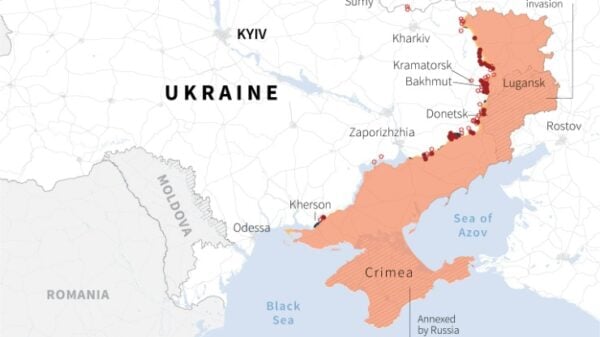
President Joe Biden is paying the political cost of rising prices, which he attributes largely to Russia’s war in Ukraine, which has pushed up global food and energy prices.
Biden insists the US economy will avoid a recession, but even as his approval ratings have plummeted, he has backed the Fed in its fight against inflation.
Fed Chair Jerome Powell and others have made it clear that they are willing to risk a downturn and will continue raising interest rates until they see clear evidence that inflation is getting closer to the 2% target.
The policy-making Federal Open Market Committee is widely expected to announce another three-quarter-point hike in the benchmark interest rate at the end of its two-day policy meeting at 1800 GMT.
From zero earlier in the year, the Fed has hiked interest rates to a range of 1.5 to 1.75 percent, which has pushed up mortgage rates and slowed home sales for five straight months.
Economists say this was the Fed’s most aggressive tightening cycle since the 1980s, when stagflation — a wage-price spiral and stagnant growth — crippled the US economy.
The challenge for policymakers is to quell inflation before it takes root dangerously, but without plunging the world’s largest economy into a recession that would resonate around the world.
While prices have continued to rise and home prices have hit a new record, there are signs that the pace of the rise has gradually slowed, which could allow the central bank to ease its rate hikes.
Global oil prices are trending lower, with the US benchmark WTI falling below $95 a barrel from its peak of more than $123 in March, and gasoline prices at the pump are down 69 cents from a record of just under over $5 a gallon in mid-March. June.
– risk of recession –
Meanwhile, the labor market has remained strong, consumer demand has not fallen dramatically and surveys show inflation expectations are trending down in the coming months.
Policymakers want a “soft landing” and tame inflation without causing a downturn, but economists warn they are on an increasingly narrow path to success and it would be easy to overshoot by being too aggressive.
“The Fed is now stuck between a rock and a hard place, and there’s no easy way out without hurting the economy,” KPMG chief economist Diane Swonk said in an analysis, noting that “Powell has begun to understand this reality underscoring by admitting a recession could happen.”
In fact, it’s rare for the central bank to act so decisively without triggering a downturn, and there are signs of concern among Fed policymakers.
Kansas City Fed President Esther George disagreed at the June meeting, saying she prefers a smaller half-point rate hike and warned that moving too quickly could be “worrying” and fuel recession fears.
GDP contracted 1.6 percent in the first quarter and the first reading for the April-June period is due on Thursday. Although the consensus forecast is for modest growth, many economists are expecting a slowdown.
Two quarters of negative growth is generally considered a recession, although that’s not the official criterion.
But Fed Governor Christopher Waller said he was ready to act even faster, with an unprecedented one-point hike if inflation accelerates further.
Swonk said the Fed “is in uncharted waters” so “uncertainty and disagreement over the trajectory of rate hikes is a natural consequence.”
#Fed #poised #attack #inflation #rate #hike