



























Markets in Asia teetered on Tuesday as traders braced nervously for a string of gains from the world’s largest companies and an expected Federal Reserve rate hike.
A shocking cut in US retail giant Walmart’s earnings outlook fueled fears that rising inflation and rising borrowing costs could hurt consumer spending and push the economy into recession.
The news left markets worried about what’s to come from other Wall Street giants this week — including Apple, Amazon, McDonald’s and General Motors.
Adding to the unease on trading platforms was news that Russia’s Gazprom will cut gas supplies to Germany citing a faulty turbine less than a week after flows resumed after 10 days of maintenance.
After a mixed performance in New York, Asia struggled to gain a foothold.
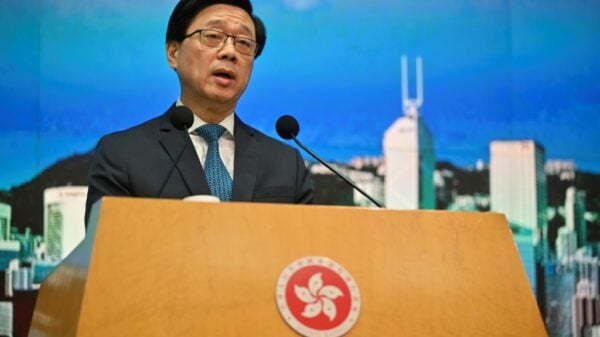
But Hong Kong received a much-needed boost with news that market heavyweight Alibaba will seek a primary listing in the city so it can be traded by mainland Chinese investors.
The move from a secondary listing would come as several US-listed Chinese companies are growing concerned about a regulatory crackdown amid a tech-sector standoff between Washington and Beijing.
It also indicated that the company is more confident that a long period of China’s crackdown on the industry is coming to an end.
A 3 percent gain in Alibaba helped the Hang Seng index rise, while there were also gains in Shanghai, Sydney, Seoul, Singapore, Manila and Jakarta.
Tokyo, Taipei and Wellington fell.
– ‘Significant risks’ –
Analysts were cautious about the outlook for global markets despite a positive uptrend in July.
“This is most likely a bear market rally and this market still faces significant risks,” Morgan Stanley Private Wealth Management’s Katerina Simonetti told Bloomberg Television.
“We’re likely to see a lot of volatility and possibly further downside in the market before the end of the year.”
For now, there will be little rest for investors from the Fed as it continues to hike borrowing costs, with another 75 basis point hike expected this week and more before year-end.
Several bank officials, including chief Jerome Powell, have indicated they are determined to bring inflation down from four-decade highs, even at the expense of economic growth.
Still, market strategist Louis Navellier said they could start easing monetary policy in the new year if the economy shows signs of tightness.
“Uncertainty about the Fed’s willingness to continue tightening if the economy slows significantly is high. Many projections suggest the Fed will reverse and start cutting rates by the summer of 2023 as the economy slows and inflation eases,” he said in a note.
– Key figures at 0230 GMT –
Tokyo – Nikkei 225: down 0.1 percent at 27,681.73 (breakout)
Hong Kong – Hang Seng Index: up 0.8 percent to 20,731.14
Shanghai — Composite: up 0.5 percent to 3,267.25
Euro/Dollar: UP at $1.0238 from $1.0223 on Monday
Pound/dollar: rise to $1.2075 from $1.2046
Euro/Pound: DOWN at 84.79p from 84.83p
Dollar/Yen: DOWN at 136.39 yen from 136.65 yen
West Texas Intermediate: up 0.8 percent to $97.43 a barrel
North Sea Brent crude: up 1.1 percent to $106.29 a barrel
New York – Dow: up 0.3 percent at 31,990.04 (close)
London – FTSE 100: up 0.4 percent at 7,306.30 (close)
#Asian #traders #cautious #ahead #results #Alibaba #lifts #Hong #Kong