





























Airlines are recovering from the huge impact of Covid but face new turmoil from skyrocketing inflation while airports struggle to cope with booming demand.
Here’s an assessment of the state of the airlines ahead of next week’s Farnborough Airshow, which traditionally sees big deals for new Airbus and Boeing planes.
– return to profitability –
Global airlines suffered cumulative losses of nearly $190 billion between 2020 and 2022, according to industry body International Air Transport Association (IATA).
However, airlines are now regaining customers, particularly in Europe and the United States, as demand is boosted by vaccination and the lifting of Covid restrictions.
A return to profitability appears within reach for airlines in 2023, according to IATA, which forecast passenger numbers this year to rise to 83 percent of pre-pandemic levels.
– Consolidation –
Rapid consolidation is taking place as the sector faces headwinds from historically high fuel prices and large pay rises amid decades of high inflation.
Many airlines are also suffering severe staff shortages after shedding thousands of jobs in the pandemic.
Staff shortages limit capacities at the world’s largest airports.
In the United States, Spirit Airlines is the subject of a takeover tussle between rival airlines JetBlue and Frontier.
In Europe, Air France and Lufthansa are vying for control of Italy’s ITA Airways, formerly known as Alitalia.
And in South America, Brazilian airline Gol and Colombia’s Avianca agreed to merge to create a regional titan.
– Restoration of air traffic –
North America and Europe are expected to return to pre-pandemic levels of air travel soon, but Asia is lagging behind as Beijing’s strict zero-Covid policy hampers the recovery.
IATA forecasts that global domestic air travel will return to pre-crisis levels by next year.
Meanwhile, major European hubs – including Amsterdam, Dublin, Frankfurt, London and Paris – are suffering from major travel chaos.
Top airports have been plagued by mountains of misplaced luggage and long security queues, while some passengers are stuck on planes due to lack of ground crew.
Airlines including British Airways and Lufthansa have had to cancel thousands of flights due to staff shortages.
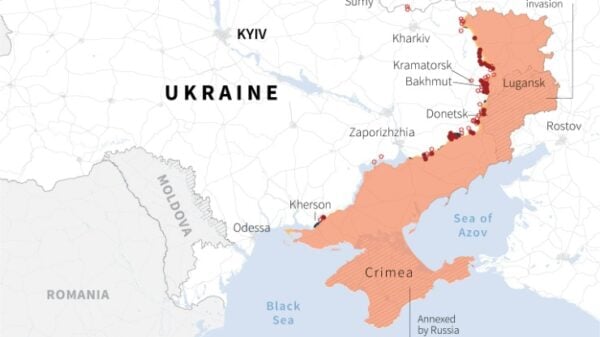
And air traffic control has faced delays, including as a result of planes being diverted to avoid Belarusian, Russian and Ukrainian airspace because of the war.
– start in mind –
European planemaker Airbus and its bitter US rival Boeing are seeing a surge in orders after cutting production in the early stages of the coronavirus pandemic.
Airlines are preparing for a strong recovery in international travel following the lifting of Covid restrictions.
Airlines are urgently looking to replace aging fleets with greener, more fuel-efficient aircraft that emit less carbon – a key theme at this year’s Farnborough Airshow.
Airbus had reduced its production rate by 40 percent in the early stages of the pandemic.
But with the recovery on track, the second half of next year sees record production of A320 passenger jets averaging 65 per month.
This is despite Airbus and Boeing facing a global supply chain crisis as economies reopen after the pandemic lockdown.
Boeing, meanwhile, is mired in trouble and still trying to change the fate of its troubled MAX jet after two deadly crashes in 2018 and 2019.
The US giant has not delivered a long-haul 787 aircraft in more than a year due to production problems, while certification of its 77X has been pushed back to 2025.
#fragile #airline #recovery #Covid