






























Production of fish, shellfish and seaweed from wild and farmed farms hit record levels in 2020 and future increases could be crucial to tackling world hunger, the Food and Agriculture Organization said on Wednesday.
Fueled by continued growth in aquaculture, global fisheries and water management together have hauled in 214 million tonnes, the UN agency said in a report.
Total first sale value of production in 2020 exceeded US$400 million, with US$265 million coming from aquaculture, a sector poised for further expansion.
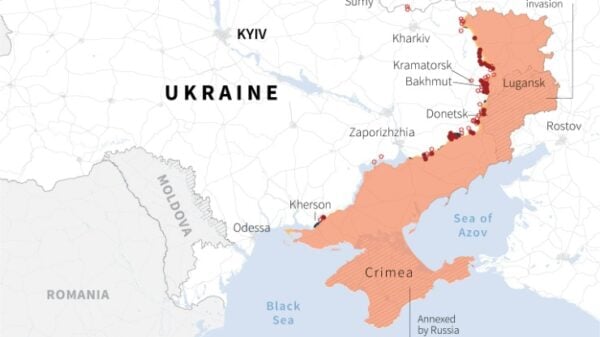
These trend lines are good news for a world facing price hikes and food shortages due to the war in Ukraine, disrupted supply chains and inflation.
“Growing fisheries and aquaculture is critical to our efforts to end global hunger and malnutrition,” said FAO Director Qu Dongyu.
But overexploited oceans, climate change and pollution — if left unaddressed — could threaten that potential, the UN agency warned.
“Aquaculture growth has often come at the expense of the environment,” Qu noted.
For example, many shrimp farms in Vietnam, China and Cambodia have displaced mangrove forests, which are nurseries for marine life and important barriers against storm surges.
Climate change poses additional challenges for experts.
“Warmed waters will create environments where bacterial diseases will become more likely,” said Josh Madeira, director of fisheries and aquaculture policy at the Monterey Bay Aquarium.
That means a sector already heavily reliant on antibiotics is likely to become even more so, he told AFP.
Aquatic animal production in 2020 — a total of 178 million tonnes — was split evenly between fisheries and aquaculture, according to the FAO report.
Algae production accounted for the remaining 36 million tons.
– Overfished stocks –
Yields of fish, shrimp and other shellfish intended for human consumption are more than 60 percent higher than in the 1990s, far outpacing population growth, according to the report released during the UN Oceania Conference in Lisbon.
On average, people worldwide now consume over 20 kilos (44 pounds) of aquatic food per year, more than double what they did 50 years ago.
Globally, 17 percent of the protein consumed by humans comes from aquatic sources. In many Asian and African countries, this figure rises to over 50 percent.
Wild and farmed foods from seas and inland waters are also a crucial source of omega-3 essential fatty acids and micronutrients, recent research has shown.
“Aquatic foods are increasingly recognized for their key role in food safety and nutrition,” said Qu.
Nearly 90 percent of aquatic animal production is for human consumption, with the remainder for non-food uses such as fishmeal and fish oil.
In 2020, 70 percent of global aquatic fisheries and aquaculture came from Asian countries.
China remains by far the largest fisheries producer, followed by Indonesia, Peru, Russia, the United States and Vietnam.
So-called capture fisheries of commercial species in the wild – including tuna, cod, salmon and particularly anchovies – fell by four percent in 2020 compared to the average for the previous three years.
Some of the decline is due to Covid-related disruptions, but the long-term decline is due to pressures from overfishing, experts say.
Catch levels peaked in the mid-1990s and have stagnated ever since, with fluctuations.
“The FAO estimates that 34 percent of the fish caught comes from overexploited stocks,” Rashid Sumaila, an economist and fisheries expert at the University of British Columbia, told AFP.
“But they are very conservative,” he added. “Independent studies speak of 50 percent.”
The problem is exacerbated by government subsidies of around $34 billion a year.
Earlier this month, the World Trade Organization (WTO) took first steps to reduce those handouts to industry, but experts say the measures have had limited impact and will take years to be implemented.
#Aquaculture #driving #aquatic #food #yields #highs