
























Fueled by inflation, airline ticket prices have started to rise again after collapsing during the pandemic, a reversal that experts say is likely to accelerate due to environmental pressures.
Members of the International Air Transport Association, gathered in Doha this week for their annual meeting, are focusing on how such increases risk undermining passenger growth targets.
IATA is also asking for government support to balance the long-term commitment to net-zero carbon emissions with these ambitious goals.
The airline industry has just come through two years in which planes flew with empty rows of seats despite offering much lower fares than before the Covid-19 pandemic.
But with the sector still stuck in the red despite movement restrictions being largely lifted, the bargain bonanza for passengers is long over.
In the United States, the average fare for a domestic flight has skyrocketed from $202 in October 2021 to $336 in May this year, according to the Federal Reserve Bank of Saint Louis.
In the European Union, the price of a round-trip ticket before tax returned in April to the same month’s 2019 level after falling almost 20 percent in 2020, according to aviation research specialist Cirium.
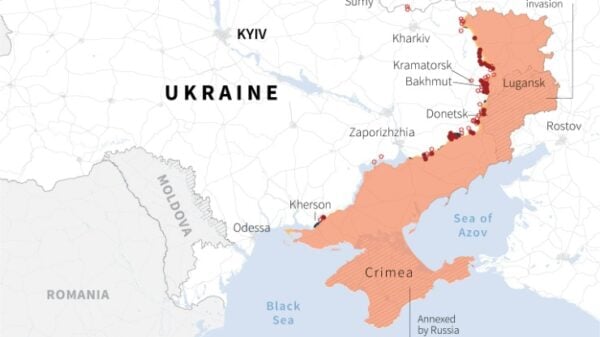
The oil price shock fueled by Russia’s invasion of Ukraine is the most obvious factor behind these price hikes.
Airlines estimate that fuel prices will account for 24 percent of their total costs this year, up five percentage points from last year.
Ticket prices are also being fueled by broader inflation – now at a 40-year high in developed markets – as well as stronger-than-expected demand for tickets and labor shortages.
– reality check –
But United Airlines chief executive Scott Kirby said despite the sharply rising trend, fares have yet to overshoot historical norms.
“In real terms, prices are back to where they were in 2014…and they’re lower than essentially any year before,” he said.
“So… I don’t think we’re going to see demand destruction.”
However, Vik Krishnan, a partner at McKinsey & Co, is cautious about how long current high demand will last.
“Some of the travel we’re seeing right now is a function of all the stimulus that governments” have been pumping into economies during the pandemic to boost citizens’ free income, he said.
“The number one discretionary income spend is travel and that’s what people are doing.
But “how long that will last remains to be seen,” he added.
– Climate crisis versus cheap holidays –
Aside from rising costs and fears that government incentives are fading, airlines face obligations that are very uneasy.
On the one hand, they aim to carry a total of 10 billion passengers by 2050, up from 4.5 billion in 2019.
And yet they are committed to achieving “net-zero” carbon emissions within the same time horizon.
The total cost of moving the sector to “net zero” is estimated by IATA at a staggering US$1.55 trillion.
“Airlines don’t have the capacity to bear the cost of this transition,” IATA director-general Willie Walsh said this week.
To reduce CO2 emissions, the industry is focusing on sustainable aviation fuels (SAFs), which are currently two to four times more expensive than fossil-based aviation fuels.
Some governments have already imposed SAF quotas, albeit in small amounts, leading airlines to levy surcharges themselves.
On Tuesday, IATA urged governments to provide subsidies to ensure SAF production reaches 30 billion liters in 2030, up from 125 million liters in 2021. It also calls for price restraints.
But even if such subsidies are forthcoming, “the transition to net-zero needs to be reflected in ticket prices,” Walsh said.
Could this reverse the longstanding global trend of air travel increasingly extending beyond the wealthy?
Krishnan believes that such “democratization” will become “tougher.”
But he also said “low-cost airlines have unleashed a world where people living in northern Europe took for granted that they could go on cheap holidays to southern Europe”.
It would be “very difficult for governments to break down such entrenched expectations,” he warned.
#Plane #tickets #continue #rise #pandemic #lows #experts