














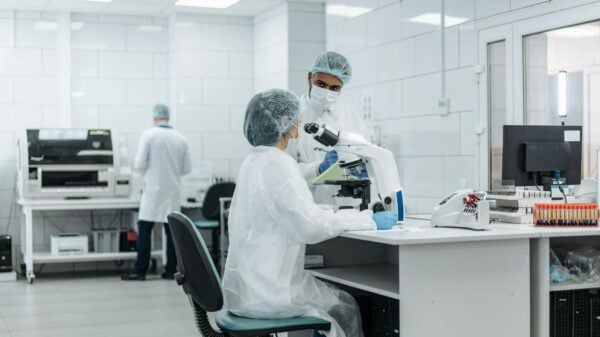











VANCOUVER, British Columbia, October 28, 2022 (GLOBE NEWSWIRE) — Spey Resources Corp. SPEY SPEYF 2JS (“speech” or the “company“) is pleased to announce that the Chemical Engineering Department at the University of Melbourne, Australia has successfully produced lithium carbonate from lithium chloride extracted from the Company’s brines in the Incahuasi Salar at the Candela II project using the Ekosolve™ process Spey has acquired the first Ekosolve production license which gives the Company priority to be the first customer to commission Ekosolve to complete the design proposal, preliminary and plant engineering and fabrication of the Incahuasi facility EkoSolve has seven other licenses to date granted and will be completed step by step after Spey Engineering start with the technique.
The brine and lithium carbonate produced are being analyzed by an external laboratory to confirm the results obtained by the University of Melbourne and the Ekosolve team. The brine underwent 10 stages of continuous processing that took approximately 22 seconds for the solvent to extract the lithium in each stage. The 10th Phase had extracted 135.05g contained lithium from 140.23g, a recovery rate of 96.03%. The purity of the lithium carbonate was adjusted to 99.5% based on the sodium carbonate used to convert the chloride. The Mg:Li ratio was over 15:1 and the EkoSolve™ process performed exceptionally well. The process was developed by Ekosolve Ltd. carried out and reported to Spey.
Phil Thomas, CEO of the company, said: “We are pleased to achieve these results. This not only proves the validity of the Ekosolve™ process for Incahuasi brines, but also the fast processing time using columns. Ekosolve Ltd. plans to build a 100 ton mini plant in Salta and the company is in active talks with Ekosolve Ltd. about a potential joint venture opportunity.”
Fig. 1 Lithium carbonate…